Émilie
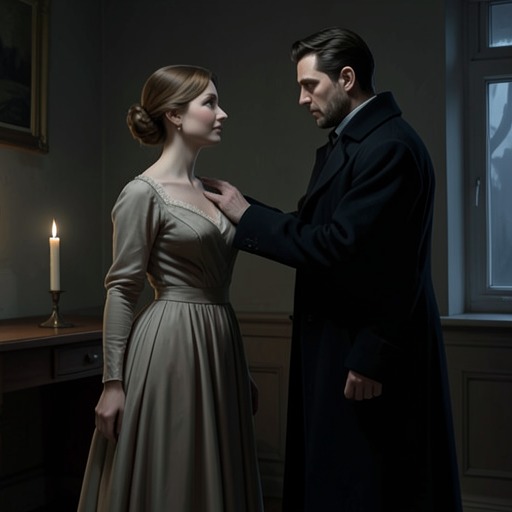
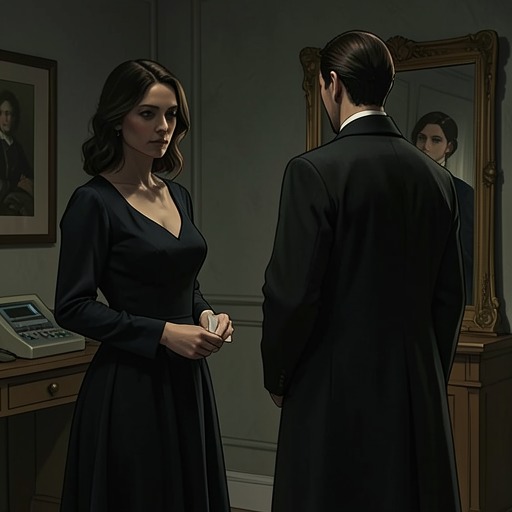
Les liaisons dangereusesÉmilie is a recurring but narrowly portrayed figure in the letters surrounding Vicomte de Valmont’s pursuit of Présidente de Tourvel. Known to Valmont from before he knew Tourvel, she enters the surviving account through two episodes at the Paris Opera: first, an encounter that places her beside him when Tourvel sees them; later, a night Valmont claims to spend with her after leaving Tourvel. In both, Émilie’s presence matters less as an independently narrated history than as part of Valmont’s attempts to explain, manage, or exploit what Tourvel sees.
Identity and Introduction
Valmont identifies Émilie as someone he had known before he knew Tourvel or experienced love for her. That description places her in an earlier part of his social and intimate life, but the letters offer no fuller account of their history. In the scenes that survive, she is not given a separate voice or an independent account of her motives; readers encounter her through Valmont’s explanations of her conduct.
Her first appearance in this episode arises from an ordinary practical request. Valmont says that he had gone to the Paris Opera hoping to find someone he had missed earlier. There he encountered Émilie, who had no carriage and asked him to take her home, a short distance away. He says that he agreed because he saw no consequence in doing so. That apparently simple decision becomes consequential when Tourvel encounters the two of them together.
The Carriage Encounter
Valmont’s account emphasizes that he immediately feared Tourvel would judge him guilty. He says that his embarrassment was visible and that he tried to persuade Émilie not to appear. The attempt, as he tells it, made the situation worse: Émilie recognized the significance of his discomfort and made a point of being seen. Valmont attributes her behavior to her awareness that this was an unusually striking opportunity to assert influence over him. His explanation makes her conduct purposeful, while leaving her own perspective inaccessible.
The carriage delay gives the encounter an unusually public and prolonged character. Valmont says that his carriage and Tourvel’s were brought alongside each other by a traffic obstruction and remained there for nearly a quarter of an hour, in plain view. The episode thus turns on more than the original decision to offer Émilie a ride: Tourvel has time to observe the pair, while Valmont is unable to remove himself from her sight. In his telling, Émilie’s deliberate visibility intensifies the distress he claims to feel and makes the scene harder to dismiss as a fleeting misunderstanding.
Valmont also says that he told Émilie that Tourvel was the woman from the letter, referring to an earlier incident in which Émilie had been involved. He reports that she remembered it and insisted on examining Tourvel at leisure, laughing as she did so. The account presents this laughter as directed at the spectacle of Tourvel’s virtue and, more immediately, at Valmont’s evident embarrassment. It is Valmont, however, who supplies this interpretation; the narrative gives no independent confirmation of what Émilie intended or understood.
A Second Meeting and Its Consequences
In a later letter, Valmont describes another evening in which Émilie becomes part of his defense against Tourvel’s suspicions. He says that he left Tourvel on a light pretext and went to meet Émilie at the Paris Opera. He presents the night spent with her as evidence that he felt no regret or exclusive attachment. Yet this account is offered in the course of persuading his correspondent that his conduct proves something about his feelings, so Émilie’s role is also rhetorical: her company serves as a claim Valmont can use in his argument.
The earlier carriage episode has already set consequences in motion. After Tourvel sees Valmont with Émilie, she sends to his home to find him; when a messenger is told that he will not return that night, Tourvel sends a further message and declares the rupture. Valmont recounts these developments alongside his version of the evening with Émilie, presenting his absence as part of the explanation for Tourvel’s decision. Émilie is therefore connected not only with the visible encounter that raises Tourvel’s suspicions, but also with the later account of the night that confirms those suspicions in Tourvel’s eyes.
Narrative Role
Émilie’s limited characterization is significant in its own right. She appears at moments when Valmont’s private conduct becomes visible to Tourvel, and her conspicuousness frustrates his effort to control what that visibility means. He first describes her as someone whose ride home seemed inconsequential; when Tourvel appears, he portrays Émilie as deliberately prolonging and sharpening the exposure. The contrast makes the scene’s central uncertainty less about what happened than about whose interpretation governs it.
The letters do not establish Émilie’s broader motives, her relationship with Valmont beyond their prior acquaintance and later company, or what she thinks of Tourvel apart from Valmont’s report. Her narrative function is consequently precise rather than expansive: she is the companion whose presence, laughter, and reappearance become evidence in a conflict between Valmont’s explanations and Tourvel’s judgment. Through her, the correspondence shows how an encounter can be made to serve competing accounts of fidelity, indifference, and blame.